
The European Superconducting Ion Gantry (EuroSIG) – moving from design to prototype
In 2025, the European Superconducting Ion Gantry (EuroSIG) collaboration started moving from conceptual design to prototyping phase.
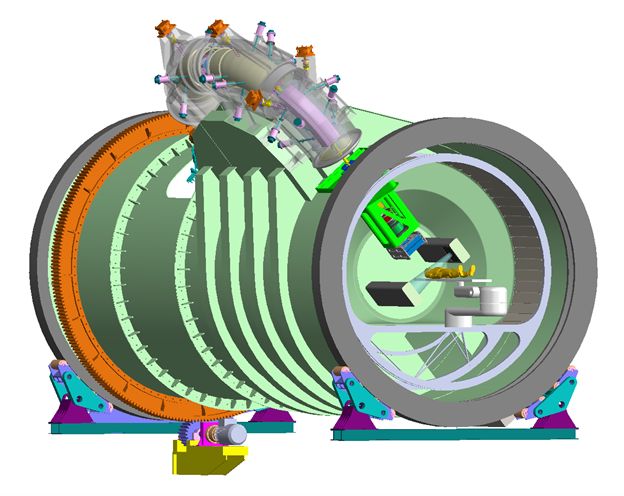
In ion therapy facilities, gantries are large rotating structures that precisely direct the beams of protons or ions on a tumour from various angles around the patient, improving dose conformity to tumours and the robustness of the treatment plan while minimizing radiation exposure to surrounding organs. While proton gantries are widespread and commercially available, the diffusion of carbon ion gantries is limited due to more demanding technological challenges and financial investments.
The Italian Institute for Nuclear Physics (INFN), the dual ion therapy centres CNAO (Italy) and MedAustron (Austria), and CERN joined forces in the EuroSIG collaboration to de-risk the technologies for a compact superconducting gantry for carbon ion therapy. Two years of preliminary design studies resulted in the choice of a fully rotating gantry composed of 4 tesla Nb-Ti superconducting magnets and a scanning system placed downstream of the last dipole section.
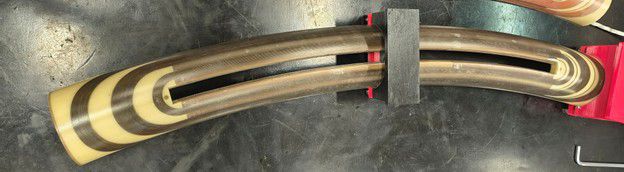
For the Superconducting dipole Demonstrator Magnet (SDM-c), the milestones reached in the last year include the production of the curved dummy coil and its use to validate the manufacturing tooling and procedures, the production of the first curved Nb-Ti coil, and the engineering and procurement of the mechanical structure.
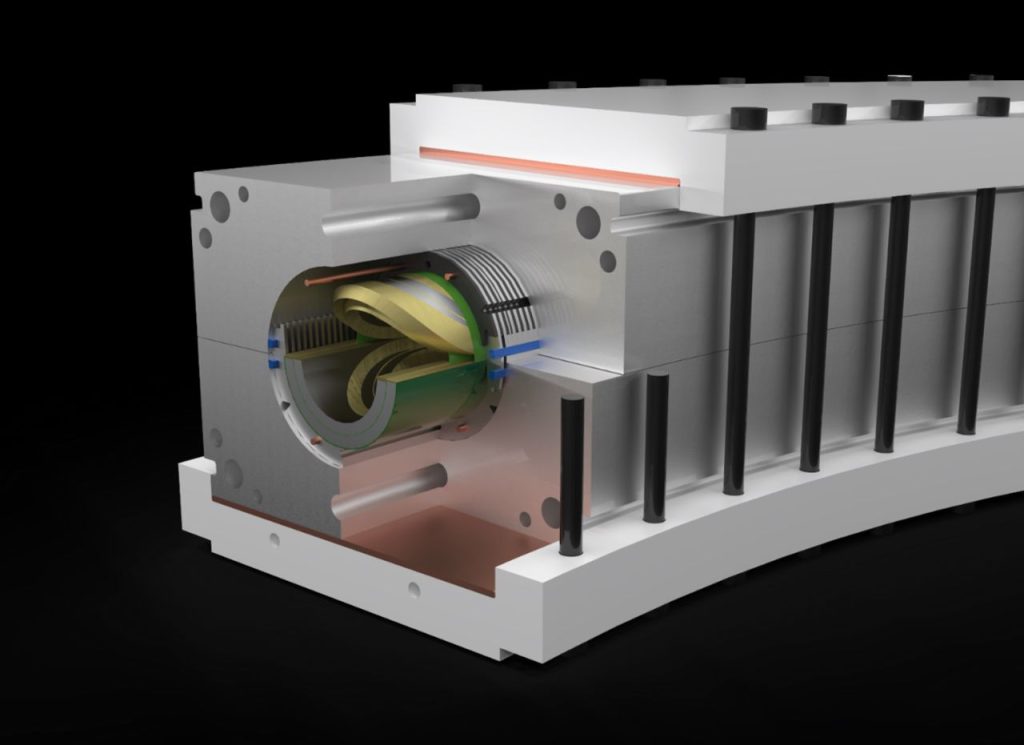
Regarding the scanning system, composed of a novel concept of a double-bending plane magnet and a power converter with modular design, the conceptual studies evolved into a complete engineering design, and the main components are currently in the procurement phase.
The results show that the project is on track to prove the feasibility of the most critical technologies of the EuroSIG gantry.
CERN technical contacts: Luca Gentini, Pierre Moyret and Diego Perini.