
MARCHESE: one AI technology, multiple applications
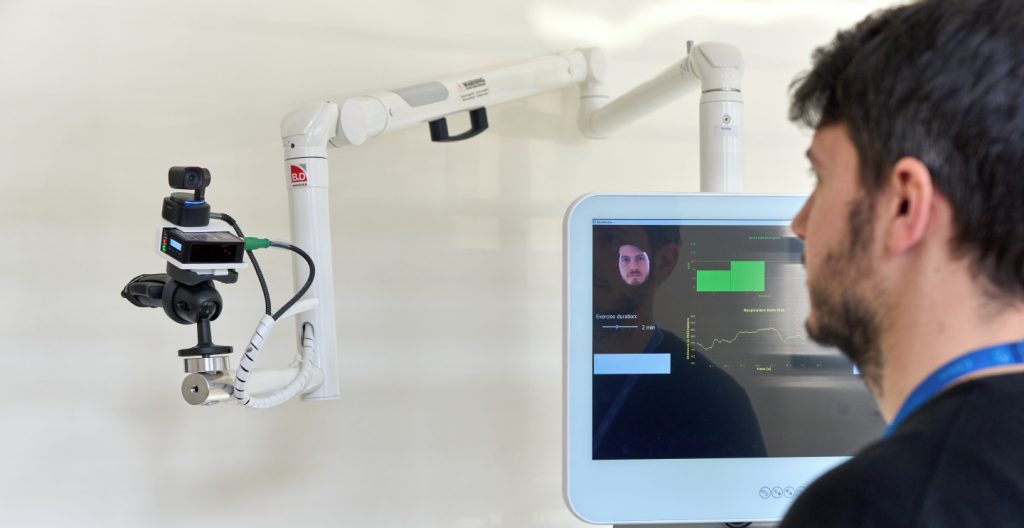
MARCHESE (Machine Learning based Human Recognition and Health Monitoring System) was developed to support rescue operations and emergency response in the Large Hadron Collider (LHC) tunnel at CERN. The LHC tunnel is 27 kilometres long and, depending on the location of an incident, a CERN rescue team may take up to 22 minutes to reach someone in need of medical assistance. During these critical minutes before the emergency team arrives, MARCHESE is designed to begin collecting data on the patient’s condition.
In complex environments such as CERN’s underground tunnels, monitoring systems are essential for collecting vital parameters including respiratory movements, measured using lasers, and heart rate, estimated through changes in skin colour.
By combining hardware components such as radar, laser distance sensors and RGB cameras with dedicated software algorithms, MARCHESE can rapidly and accurately detect and measure vital signs. This capability enables its use in a wide range of scenarios including healthcare, search and rescue operations, rehabilitation and monitoring in offshore platforms.
As a non-invasive system, MARCHESE can monitor individuals without physical contact, reducing the risk of infection transmission. Because skin contact is not required, vulnerable patients such as those with severe burns or newborns can be monitored safely and comfortably. In addition, the system can be used across multiple patients, reducing environmental impact compared with traditional contact-based monitoring systems that rely on patient specific sensors and disposable electrodes.
These characteristics make MARCHESE suitable for healthcare applications and other situations where contactless monitoring is beneficial, including scenarios involving displaced populations. The system can also support techniques such as thermography, used to monitor surface temperature, and photoplethysmography, used to monitor blood volume changes related to cardiac activity.
A clinical trial conducted in collaboration with the University Hospital of Lille (CHU Lille) has demonstrated the technology’s potential for patient monitoring. MARCHESE is portable, quiet, contactless and capable of operating autonomously, making it suitable for clinical environments.
The system is also being tested to support the prevention and early detection of critical situations during the hospitalisation of elderly patients. Remote monitoring could reduce infection risks for medical staff, improve patient comfort and enable the simultaneous monitoring of individual patients or groups of patients.
MARCHESE can also support assistive robotic rehabilitation by helping clinicians adjust exercise intensity based on the patient’s physiological response. By assessing how the body reacts to physical activity, the system can contribute to safer therapy, more personalised rehabilitation programmes and improved recovery outcomes.
In 2025, the underlying technology of MARCHESE, VitaSense AI, was added to the pool of technologies available through CERN Venture Connect (CVC) – a programme designed to facilitate access to CERN technologies, engineering expertise, and to a deep tech support network.
CERN technical contacts: Roberto Cittadini, Mario di Castro, and Francesca Schettino.